 Leeds
Leeds Doncaster
 Sheffield
 Bradford
 Hull
Hull Halifax
 Sunderland
 Newcastle
 Middlesborough
 Yorkshire Moors
 Teesside
 Cumbria
 Harrogate
 Teesdale
 York
York Yorkshire Dales
 Northumberland
 Goole
Goole Carlisle
 Keswick
 Kendal
 Barrow-in-Furness
 Lancaster
 Blackpool
 Morecambe
 Southport
 Liverpool
 Wigan
Wigan Manchester
 Blackburn
 Burnley
 Forest of Bowland
 Oldham
 Chester
 Stockport
 Peak District
 Skipton
 Crewe
Crewe Rotherham
 Stoke
Stoke Driffield


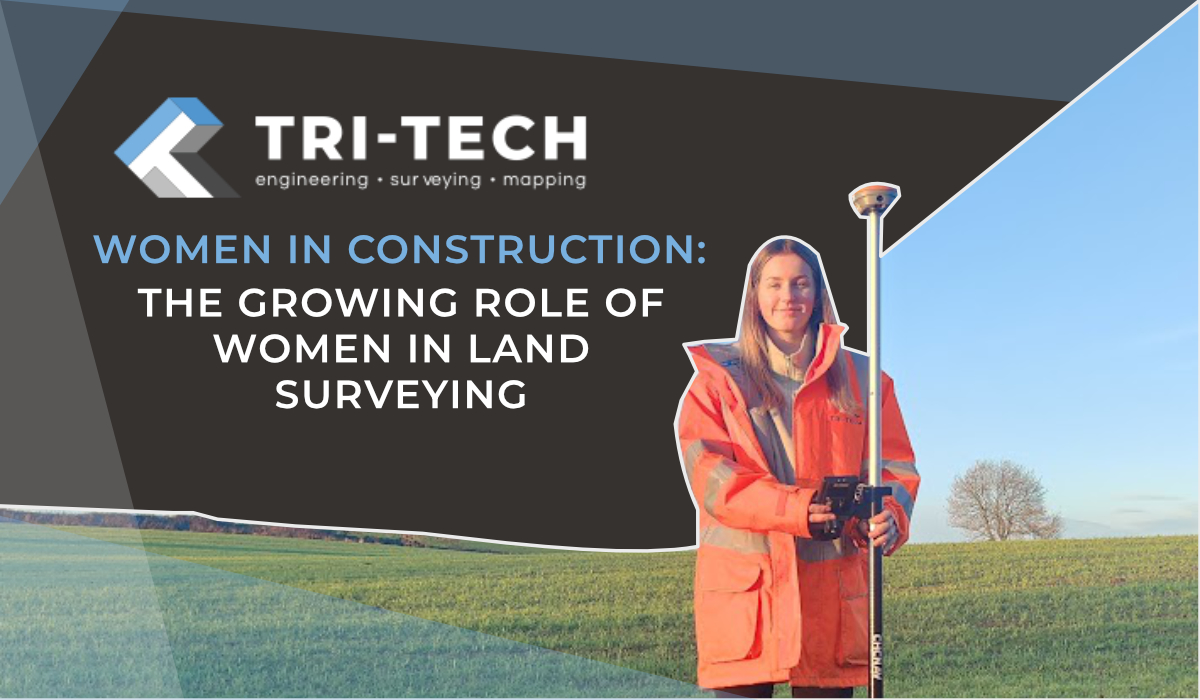
The UK land surveying and geospatial sector continues to face a growing skills shortage, with demand for experienced professionals increasing across construction, infrastructure and development projects. One important way the industry can address this challenge is by encouraging more women to pursue careers in land surveying and the wider geospatial sector.
While the profession has traditionally been male-dominated, there has been encouraging progress in recent years as more women enter the industry through apprenticeships, university courses and trainee roles. Increasing female participation not only helps expand the talent pool but also strengthens innovation, collaboration and long-term workforce sustainability across the construction and surveying industries.
Why diversity matters in surveying and construction
Modern land surveying plays a crucial role in the construction sector, supporting everything from topographical surveys and measured building surveys to 3D laser scanning and drone mapping. As technology continues to transform the industry, attracting talent from a broader and more diverse workforce is essential.
Diverse teams bring different perspectives and problem-solving approaches. Skills such as attention to detail, communication, organisation and analytical thinking are vital in surveying projects, and a more balanced workforce helps improve collaboration across construction teams.
However, awareness of surveying as a career path remains relatively low among young people, particularly women. Increasing visibility of the profession and promoting the wide range of opportunities within the geospatial and surveying sector will help attract the next generation of professionals.
How Tri-Tech is supporting women in the industry
At Tri-Tech, we are proud to be contributing to a more inclusive future for both the surveying profession and the wider construction industry. Today, around 43% of our workforce is made up of women, demonstrating how the industry is gradually becoming more balanced.
We are also seeing positive changes in the next generation of surveyors. Many of our trainees and work experience placements are women, reflecting a growing interest in surveying careers among young professionals.
In recent years, we have also seen a rise in female applicants and hires, highlighting how the profession is becoming more of a level playing field where candidates are recognised for their skills, potential and enthusiasm for the industry.
By supporting early-career development and providing opportunities for training and progression, Tri-Tech is helping to strengthen the future of the UK surveying and geospatial workforce.
Female Representation in the Surveying Industry
Historically, the surveying profession has been male-dominated. Although more women are now entering construction and built environment careers, female representation within land surveying and geospatial roles remains relatively low.
Many women are still unaware of surveying as a potential career path, particularly within school and university STEM education. As the profession becomes more technology-driven, the industry has a significant opportunity to attract new talent by promoting the wide range of career paths available within modern surveying and geospatial technology.
As demand for surveying expertise continues to grow across the construction sector, attracting and supporting diverse talent will be essential.
Encouraging more women to explore careers in land surveying and geospatial technology will not only help address the industry’s skills shortage but also ensure the profession continues to evolve, innovate and thrive.
At Tri-Tech Surveying, we are proud to support this progress and look forward to seeing even greater diversity within both the surveying and construction industries in the years to come.